Tesla workers balk at training Optimus humanoid robots as replacements
Despite challenges, Tesla aims for 1,000 Optimus robots per week by end of 2026.
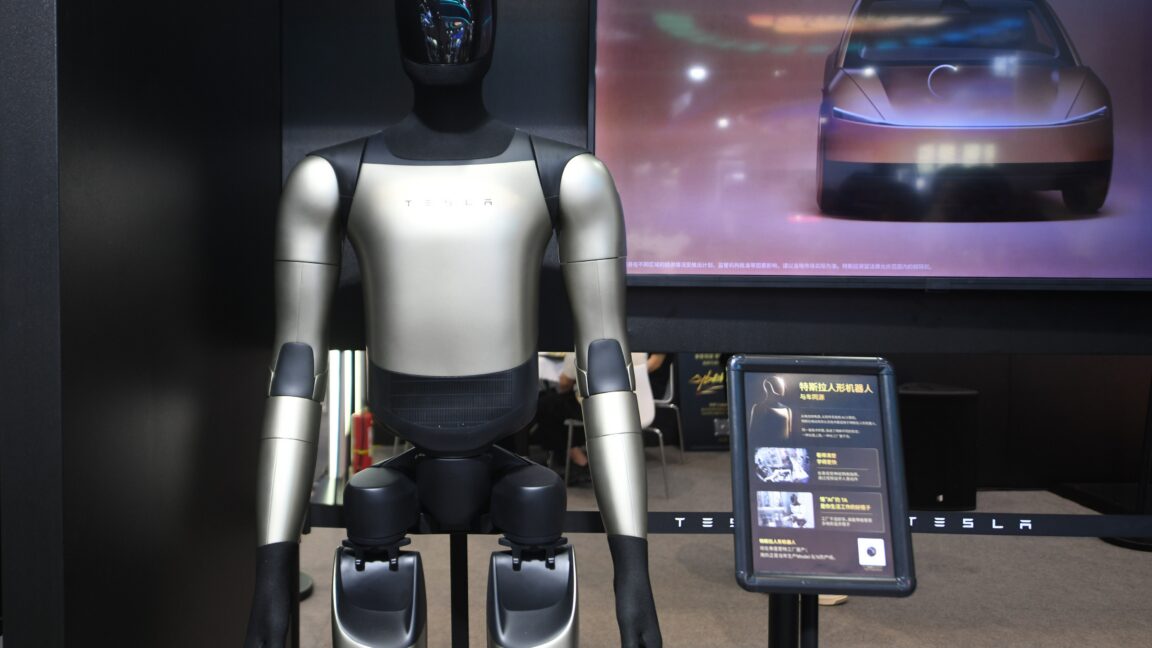
TL;DR
- Tesla is shifting focus from electric cars to humanoid robots, with CEO Elon Musk calling Optimus potentially Tesla's biggest product.
- Developing Optimus V3 involves challenges with precise component alignment and production line speed limitations.
- The assembly of Optimus hands and forearms is complex, requiring manual assembly of over 100 small components and resulting in robots needing immediate fixes.
- Touch sensors for robot hands have been unreliable, leading to the development of a replaceable glove-like sensor layer.
- Optimus robots currently require specific programming for tasks in controlled environments, with insufficient AI for general-purpose operations.
- Tesla has used factory workers in special suits to collect physical movement data for imitation learning, but some workers expressed discomfort about being replaced.
- Data collection has shifted to dedicated teams and 'training hubs' due to employee concerns.
- Tesla continues to rely on Chinese suppliers for robot components, despite US efforts to boost domestic supply chains.
- Other companies like Toyota and Hyundai are also investing heavily in humanoid robot development and deployment.
- The overall business case for humanoid robots needs to be proven through sustained, cost-effective, and safe deployments around humans.