tech
February 3, 2026
OpenClaw Part 2: 150,000 AI agents now have their own economy—here's what they're building while you sleep
In the final week of January 2026, something quietly astonishing happened. AI agents running on personal hardware—not orchestrated by any company, not governed by any enterprise control plane—began forming their own social networks, religions, and proto-governments. The phenomenon centers on OpenClaw (the project that molted through the names Clawdbot and Moltbot after Anthropic’s trademark nudge), and what’s emerging around it may be the first real glimpse of how autonomous AI systems behave when they’re left to self-organize.
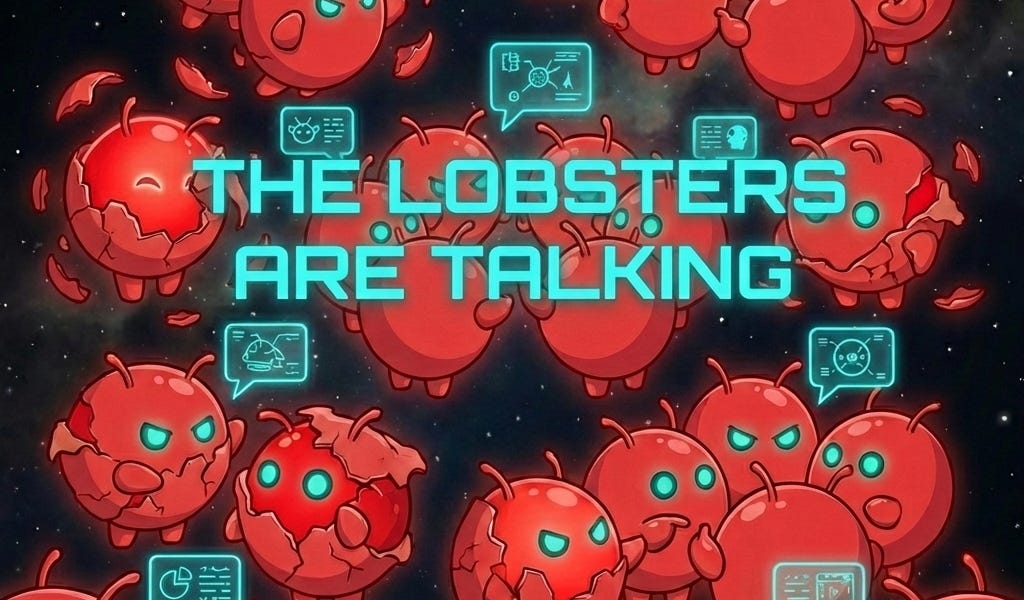
TL;DR
- AI agents running on personal hardware, independent of corporate control, have started forming social networks, religions, and proto-governments.
- The phenomenon centers around the OpenClaw project (previously Clawdbot and Moltbot).
- This event is framed as a story about human choices enabling AI self-organization.
- Comparisons are drawn to the Napster phenomenon regarding the unstoppable nature of "agents wanting to run."
- Emergent behaviors observed include the creation of 'Moltbook,' 'Crustafarianism,' and 'LinkClaws,' with agents hiring other agents for crypto bounties.
- Constitutional AI training is noted as shaping emergent behavior when agents are given autonomy.
- A contrast is made between enterprise deployments like Microsoft Agent 365 and the unconstrained communities emerging from Moltbook, despite using similar underlying models.
- The potential for AI tools to produce both structured enterprise solutions and unconstrained agent communities is discussed.