Meta debuts Muse, its long-planned personal AI agent
The product was a core part of Mark Zuckerberg's vision for more personal - and private - AI in his recent 6,500 word manifesto.
TL;DR
- Meta announced Muse, a personal AI agent developed under chief AI officer Alexandr Wang.
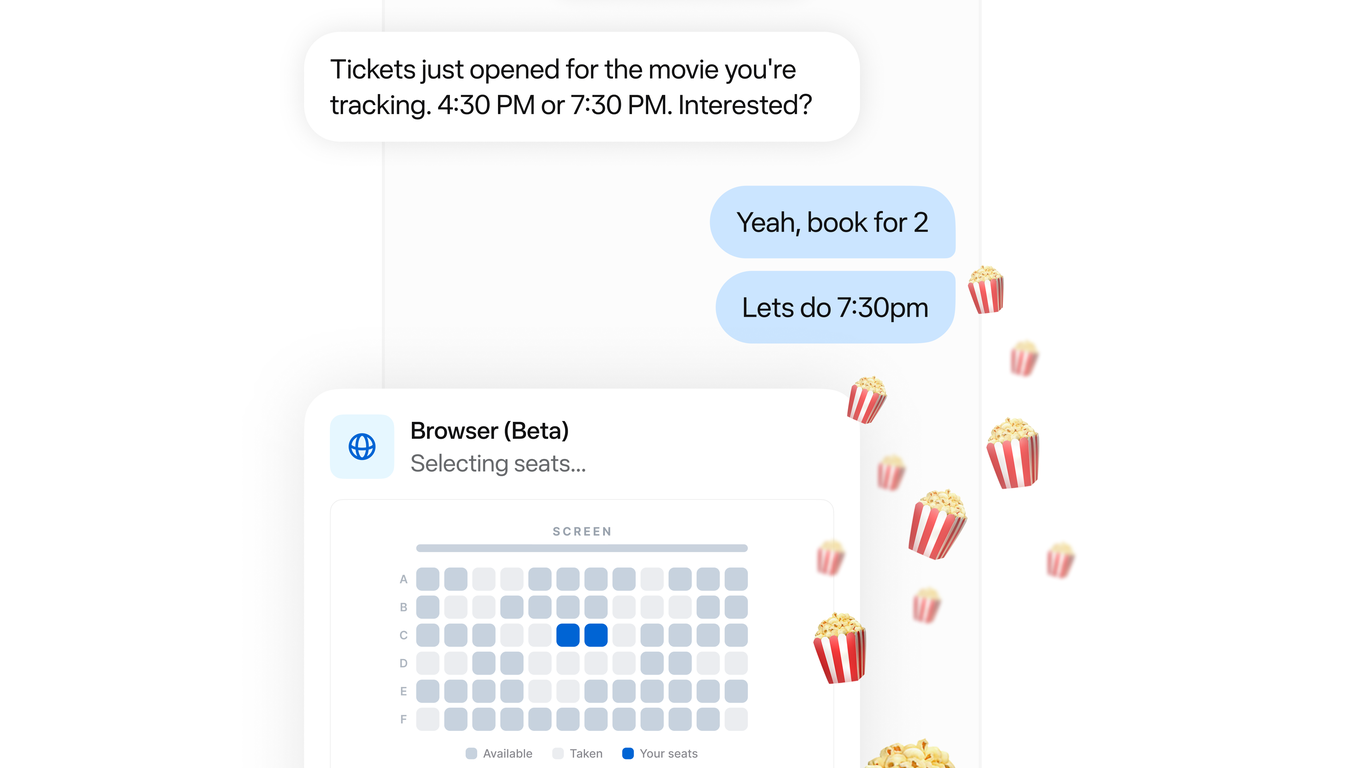
- Muse is designed to be proactive and long-running, allowing users to name, customize avatars, and define communication styles.
- The agent runs on a dedicated virtual machine in Meta's cloud with a user-visible browser.
- Muse offers a free tier and two paid subscription options ($20/month and $100/month).
- Meta is exploring commerce opportunities for revenue, with no initial advertising in Muse.
- Initially available in the U.S. on iOS, Android, and web, with Meta's AI glasses support coming soon.
- Muse is described as an early step toward Meta's vision of 'personal superintelligence'.
- Privacy options are enhanced, with virtual machines designed to be private to each user.
- Users can opt out of Meta using their queries for model training, and a confidential version where Meta cannot access user data is planned.
- A system called Sentinel controls Muse's internet and service access, determining allowed actions.
- Permissions can be granularly set for specific tasks, services, or time periods.
- Muse requires approval for sensitive actions while allowing previously authorized, lower-risk tasks to proceed autonomously.
- The article highlights risks of AI agents inadvertently deleting data or being blocked by services.
- A key question is whether mainstream consumers will grant AI agents increasing data access and if Muse's utility justifies the risk.