The Anticipation Gap: Why 4 Problems Have to Be Solved Together for Consumer AI to Work
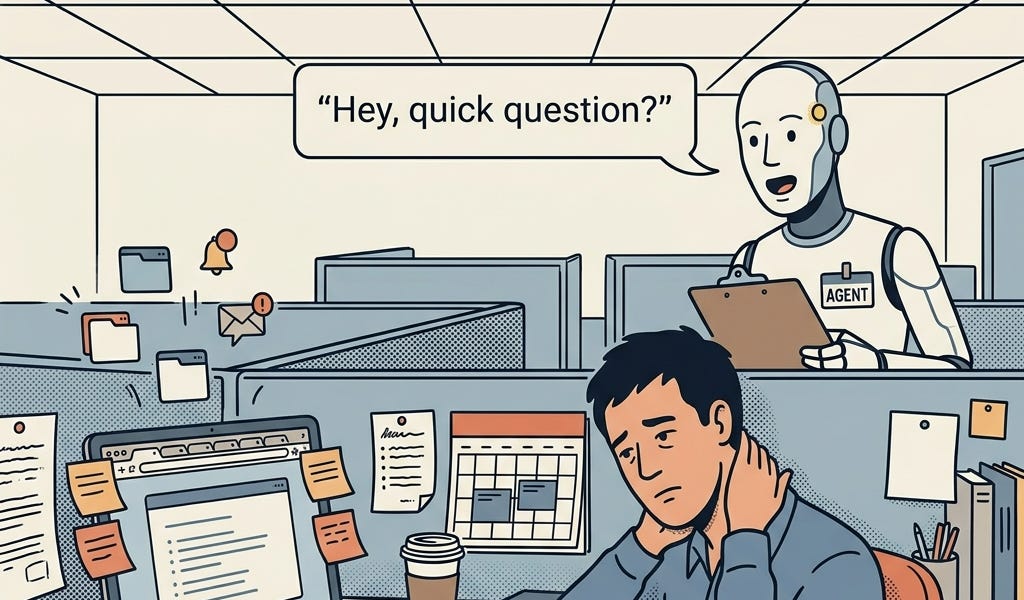
The most 2026 problem in consumer AI is that the software is finally capable enough to help, and somehow it has become one more thing to manage. More tabs, more sessions, more partial tasks, more agents asking which gift to buy and which flight to book and which email to send. The agents are real. They work. And the product they have collectively produced is another inbox.
TL;DR
- Consumer AI software is capable but has become another task to manage, functioning as another inbox.
- Enormous consumer demand for AI exists, with platforms like ChatGPT, Claude, and Gemini reaching vast user bases.
- Agentic capabilities are real and shipping, with examples in coding, flight booking, and research.
- The missing piece for consumer AI adoption is anticipation: systems that act at the right moment without explicit instruction.
- Current shipping consumer agents have not crossed the line into anticipatory action.
- Key problems not yet solved by shipping products include context, reliability, permission, and judgment.
- Solving three out of the four core problems results in zero success.
- The article outlines bets in the field, including various theses and categories like wearables and verticals.
- The path to breakthrough involves probability-weighted predictions, with a contrarian bet highlighted.
- A working calendar hygiene system using existing tools is presented as a close approximation to an anticipatory agent.
- Teams building against anticipation are poised to win the consumer AI market.
- This newsletter focuses on actionable advice without hype.