OpenAI says it cracked Navier-Stokes, one of math's grand challenges.
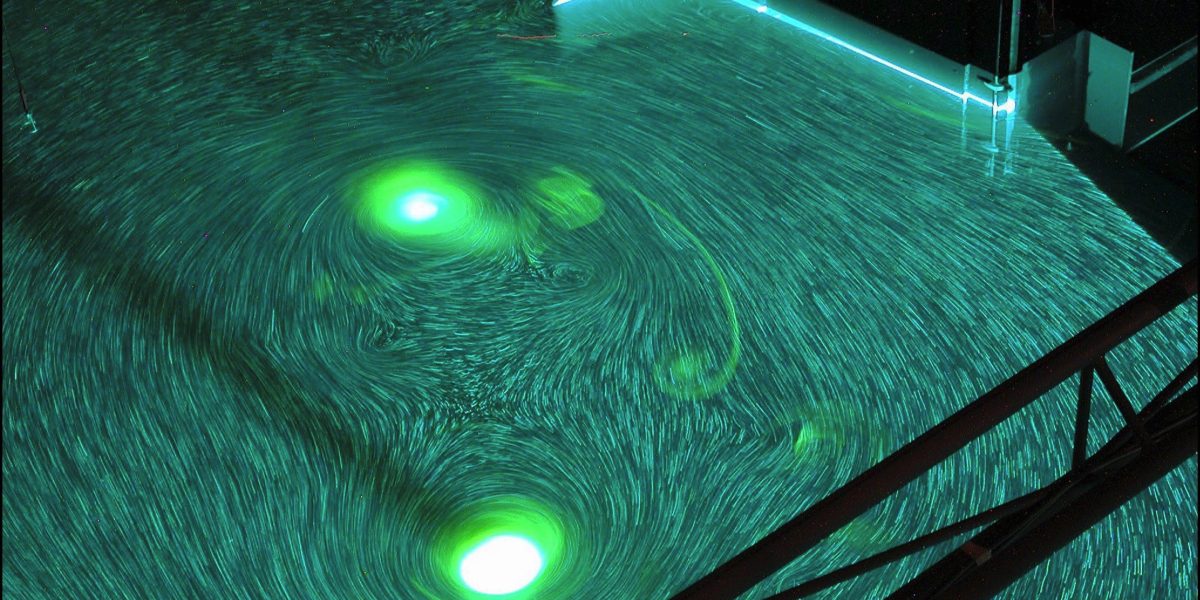
Apologies in advance for a long essay today. But there are several important points to be made and the background is, well, complicated.Over the weekend, rumors swirled that Anthropic was on the cusp of announcing that one of its AI models had cracked one of the Millennium Prize Problems. These are seven complex mathematical challenges that the Clay Mathematics Institute, founded by American mutual fund magnate Landon Clay, selected in the year 2000, offering a $1 million prize for the first correct solution to each problem.The specific problem that Anthropic had cracked, the rumors said, was something called the Navier-Stokes equations. These come from the field of physics, where they explain certain properties in fluid dynamics, and are useful for everything from weather forecasting to aircraft design. For everyday, empirical purposes, the equations work well, but mathematicians have never been able to prove whether the equations hold for all fluid interactions across all time sequences. Are there special circumstances under which the equations break down, resulting in what is known as a “singularity”: a point at which one or more fluid properties, such as pressure or velocity, “blow up”—i.e., race off to infinity? Proving that such singularities exist or that the equations hold for all conditions is what the challenge is all about.Now, as I write this on Tuesday, we’ve learned a bit more about what happened—and the story turns out to be more complicated, controversial, and acrimonious than the simple story that one of Anthropic’s models had solved Navier-Stokes—which, it turns out, it had not. Instead, OpenAI today announced that a multi-agent system, powered and coordinated by an unreleased internal model—that at one point had 10,000 different sub-agents working different parts and variations of the problem—has solved Navier-Stokes. OpenAI’s AI proved that, in fact, there are conditions under which the equations will “blow up.” Yet, how exactly OpenAI came to solve Navier-Stokes is, it turns out, a matter of great controversy.
TL;DR
- Rumors suggested Anthropic's AI solved a Millennium Prize Problem, the Navier-Stokes equations.
- OpenAI announced its AI system, using a multi-agent approach with 10,000 sub-agents, solved the Navier-Stokes equations.
- The AI proved that conditions exist under which the Navier-Stokes equations 'blow up,' meaning they break down.
- The process and circumstances of OpenAI's solution are a subject of controversy.