economy
Four firms control more than half of the world's seed supply. Italian farmers are fighting back and returning to the bartering system
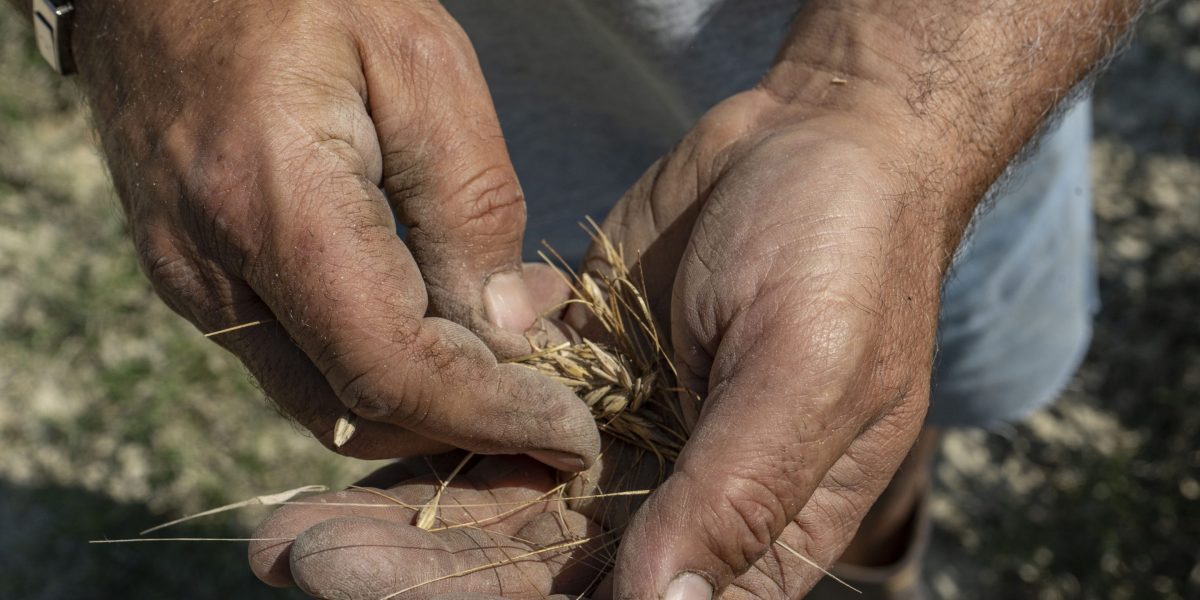
A farmhouse in the Marche hills doesn’t look like the front line of a fight against four of the world’s biggest agrochemical companies. But that’s what it became on Aug. 7, when a five-year-old Italian farming network gathered there to teach people how to save, trade, and pass down seeds no company can patent. And the stakes are high: Farmers can be sued for replanting patented seeds.
TL;DR
- Four agrochemical companies (Bayer, Corteva, Syngenta, and BASF) control 56% of the global seed market and 61% of the pesticide market.
- Mergers and acquisitions have led to this market concentration in the past decade.
- Farmers can be sued for replanting patented seeds due to utility patents, unlike traditional plant variety rights.
- The Rete per l’Agricoltura Naturale (RAN) is promoting a 'Distributed Seed House' project for saving, reproducing, and sharing non-patented seeds.
- RAN's workshops operate on a gift-economy model and have quickly sold out, indicating strong interest.
- The concentration of seed control poses risks to biodiversity and the survival of organic farming.
- Article 9 of the FAO’s International Treaty on Plant Genetic Resources for Food and Agriculture recognizes farmers' rights to seed.