Steam Frame: The Ars Technica review
Valve’s new $1,059 VR hardware tries to revive an abandoned VR “revolution.”
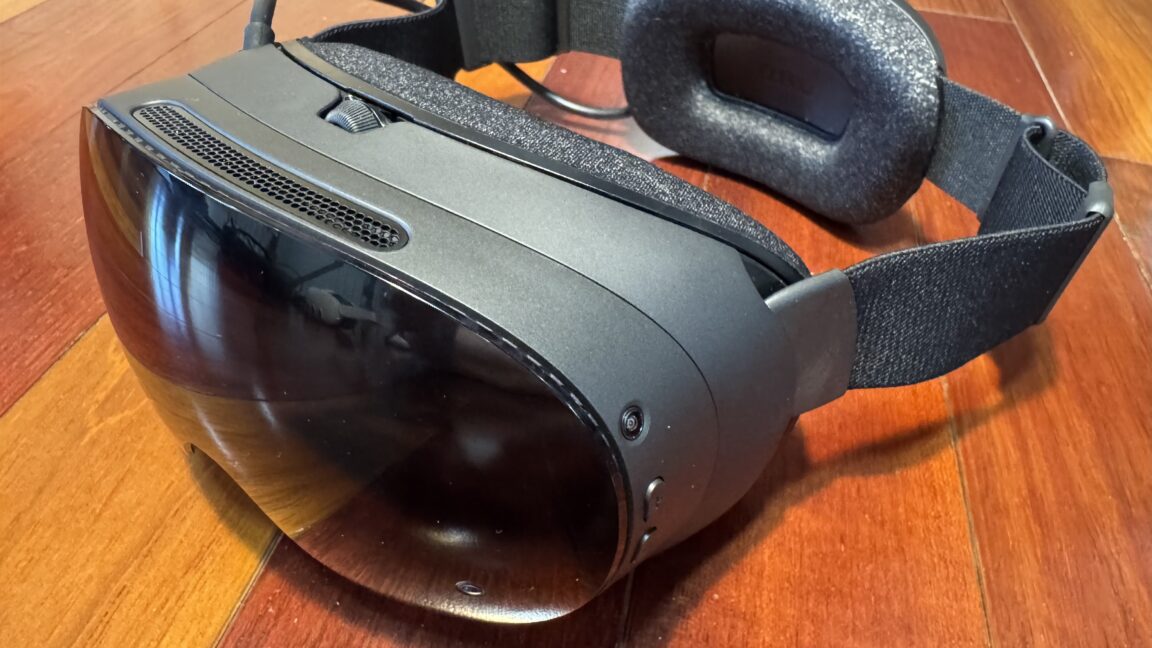
TL;DR
- The Steam Frame is Valve's latest foray into VR hardware, launching in 2026 as a standalone headset.
- It features a lightweight design (440g) with a rear-mounted battery for improved comfort, surpassing the Meta Quest 3 in ergonomics.
- The headset offers a 144 Hz, 2160 x 2160 per-eye resolution display with a 110-degree field of view and inside-out tracking.
- However, the Steam Frame suffers from noticeable head-tracking juddering, poor battery life (around 1.5 hours in Performance mode), and a loud fan.
- Wireless streaming from a PC is a viable option, offering low latency and improved performance, though initial setup can be finicky.
- Native SteamVR games often experience compatibility issues on the Frame's new SteamOS architecture, with a limited "Great on Frame" list.
- Non-VR games are playable on a virtual screen but are limited by the headset's processor, performing poorly compared to even the Steam Deck.
- Priced at $1,059, it's significantly more expensive than the $599 Meta Quest 3, with fewer exclusive titles and a less mature platform.
- Half-Life: Alyx is included and runs well in its standalone version, but it's a port of a five-year-old game.
- The primary appeal for some may be avoiding Meta's platform and account requirements, with Linux desktop access available.