Human
Google’s AI search summaries will now quote Reddit
Posts from this topic will be added to your daily email digest and your homepage feed.
5 days ago
Google is quietly rewriting the front page of the internet again—and this time, it’s stuffing its AI answers with more old‑fashioned links and fresh human chatter from Reddit and other forums.
Two years ago, Google shoved its traditional “10 blue links” down the page and parked AI Overviews at the top of Search for a huge share of queries. The move was sold as progress; publishers and many users experienced it as a traffic siphon.
Publishers spent years tuning headlines and metadata for Google, only to watch a chatbot summarize their work and push their links further down the page, a shift Ars Technica bluntly frames as a “course correction” now that Google is adding more outbound links back into AI answers.
The quality of those AI Overviews became a story in itself. The system was easily tricked by sarcasm and low‑quality sources. TechCrunch notes that the model infamously cited satire outlet The Onion to tell someone to eat “one small rock per day” and used a Reddit post to suggest putting glue on pizza so the cheese sticks better — the sort of viral fiascos that made users question why this thing was at the top of search in the first place.
Google improved the tech, but not enough to avoid scrutiny. A New York Times analysis (summarized by TechCrunch) found AI Overviews were accurate about nine times out of ten — a statistic that sounds impressive until you remember Google processes trillions of queries a year, meaning “hundreds of thousands of searches turn up inaccurate results every minute.”
Against that backdrop of jittery publishers and skeptical users, Google is now dialing its AI interface back toward something more legible, more link‑heavy, and more human.
On May 6, 2026, Google announced a slate of AI search updates built around what it calls “firsthand sources.” The Verge reports that Google is explicitly acknowledging how people actually search: they often tack “Reddit” onto queries to surface real experiences instead of SEO‑stuffed pages.
So Google is pulling that behavior into the product. AI Search will now show “a preview of perspectives” from Reddit, social media, and other web forums, directly inside AI responses. These excerpts are meant to connect a question—say, how to fix a specific bike issue or whether a niche gadget is worth buying—to real‑world conversations that have already played out online.
Crucially, these won’t just be anonymous blobs of text. Google says it will attach more context to these conversational links, including a creator’s name or handle and the community name, to help you judge credibility at a glance. The Verge notes that those firsthand snippets will appear under labels like “Expert Advice,” pointing people to specific subreddits and specialized forums.
In practical terms, that means you might see a photography forum quote about exposure time when searching “how to shoot the northern lights,” plus a clickable link labelled with the exact community name so you can “jump to the full conversation.”
This is more than a UI tweak; it’s Google formalizing a truth Reddit’s CEO boasted about last year: “just about anybody using Google at this point will end up on Reddit.” Now Google wants users to end up on Reddit — but via its AI layer.
There’s an obvious tension here: Google is feeding a hallucination‑prone AI more messy human content and then elevating that mix to the top of the page.
TechCrunch flags the risk directly: citing web forums and discussion boards “can help users find answers to more niche queries,” but this “design choice could also prove chaotic.” Forums are full of sarcasm, in‑jokes, trolls, and out‑of‑date advice. That’s fine when you’re reading a thread in context; it’s much less fine when an AI model strips out the nuance and repackages it as an authoritative synthesis.
Google’s pitch is that some questions don’t have simple yes‑or‑no answers, and that’s where lived experience shines. “For many searches, people are increasingly seeking out advice from others,” the company explains; the AI will “include a preview of perspectives from public online discussions, social media, and other firsthand sources” to help users find “the most helpful insights to explore further.”
But that also blurs the job description of AI Overviews. As TechCrunch puts it, Google is “complicating the role” of the feature: is the AI supposed to answer the question, or “serve you a variety of sources that might have the information you’re looking for?” If the summary and the linked human voices disagree, who does a user trust?
Two days after the Reddit‑and‑forums announcement, Ars Technica detailed a second wave of updates that read like an olive branch to the open web — or at least to the parts of it that have been hemorrhaging traffic since AI Overviews went live.
The top of a Google search page is “prime real estate,” Ars notes, and for the past two years it has “primarily been the domain of AI Overviews.” Publishers “haven’t exactly loved being pushed down the page by a chatbot and may blame AI Overviews for recent traffic drops,” the outlet writes, but Google “is not admitting fault” even as it adds more outbound links into its AI answers.
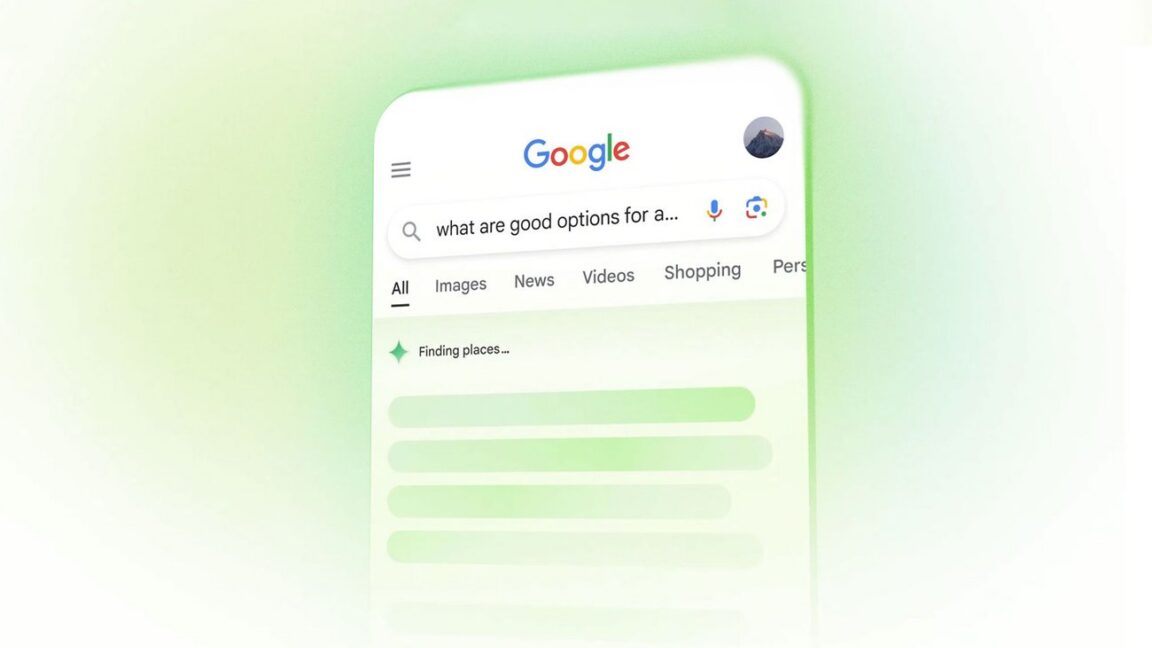
The first new element is a section at the bottom of AI Overviews and the dedicated AI Mode called “Further Exploration.” This box presents a bullet‑point list of articles and analysis relevant to the original query — for example, a search for urban green spaces might include links to particular projects in New York and Singapore.
Next comes “Expert Advice,” which overlaps with the May 6 announcement: a snippet of content from around the web, including news, reviews, and “discussions from public‑facing forums and social media,” each with a link so you can “jump to the full conversation.”
Beyond those boxes, Google says AI answers will “include more links generally,” appearing as small pills at the end of paragraphs. Clicking one brings up a list of sources the model claims underpinned that specific portion of its answer.
On top of that, hovering over any link in an AI Overview will surface a preview pop‑up showing more information about the site before you click, another nudge toward transparency about where the AI is getting its material.
Taken together, these features move AI Overviews away from being an opaque black box sitting between users and websites, and closer to an annotated guide to the wider web — albeit one still curated, framed, and ranked by Google’s algorithms.
Users. For searchers, the upside is obvious: richer context and faster routes to real conversations. Instead of guessing which of 10 nearly identical SEO articles might be useful, you can scan a mix of expert forums, social threads, and traditional sites, with creator and community labels helping you assess who’s talking. The downside is cognitive overload and credibility whiplash—especially if the AI’s neat summary doesn’t quite match what those humans are actually saying.
Publishers and creators. This is a partial win. Ars calls it a “course correction,” but notes Google won’t say out loud that AI Overviews have slammed traffic. More links in the AI box should mean more clicks for some sites, especially niche communities and specialty blogs that answer long‑tail questions. Yet all of this still happens under the AI canopy, which may keep a big chunk of casual users from ever scrolling down to ordinary results.
Forum creators, meanwhile, get both exposure and risk. Being elevated as “Expert Advice” can drive traffic and clout; it also increases the stakes when bad or joking advice is surfaced without nuance.
Google. Strategically, this is defensive product design. The company gets to say it’s listening to publishers by shoving more links into its AI output; it placates users by injecting human voices they were seeking out anyway; and it keeps the AI Overview glued to the top of the page as the default experience.
At the same time, TechCrunch’s framing of a “chaotic” future where AI pulls from web forums captures the central gamble. Google is betting it can tame the messiness of human discourse just enough to keep trust high, while still feeding its AI enough colorful content to feel useful and modern.
The through‑line in all these changes is a quiet but important repositioning. AI Overviews began as an all‑knowing oracle that would simply tell you the answer. With these May 2026 updates, Google is recasting the feature as a hybrid: part answer engine, part concierge to the rest of the web.
The Verge notes that Google is also surfacing “sources for related topics” alongside AI Search results—for instance, linking to touring guides and training blogs when you search for cycling routes, even if those aren’t the direct answer you asked for. That nudges search back toward exploration and away from the one‑shot answer that threatened to starve the open web.
Whether this is enough of a correction—or just a more elaborate funnel into Google’s AI front end—will depend on what happens next: do publishers see meaningful traffic return? Do users feel better informed or more confused? Does quoting Reddit inside a model that once told people to eat rocks prove to be wisdom, or hubris?
For now, one thing is clear: Google’s AI search isn’t going away. It’s just learning to point, quote, and defer a little more, instead of pretending to know everything itself.