Human
Is Meta’s Muse Spark the Path to Personal Superintelligence?
Meta Superintelligence Labs has unveiled Muse Spark, an AI assistant capable of perceiving the user’s world and their needs
17 days ago
Meta has launched Muse Spark, a new natively multimodal AI model developed by Meta Superintelligence Labs and positioned as the engine behind updated Meta AI experiences across Facebook, Instagram, WhatsApp, and the standalone Meta AI app and website in the US. Both AI and Human coverage agree that Muse Spark is closed-source, accepts multiple input types including text and images but currently outputs text only, and is architected around advanced reasoning features such as tool use, multi-agent orchestration, and a special "Contemplating" mode where parallel sub-agents work through complex tasks. Reports concur that the system is designed to tackle sophisticated questions in domains like science, math, and health, that it is framed as Meta’s attempt to close the gap with leading models from OpenAI and Anthropic, and that it draws on a significantly rebuilt AI stack that emphasizes safety while still pursuing highly capable behavior.
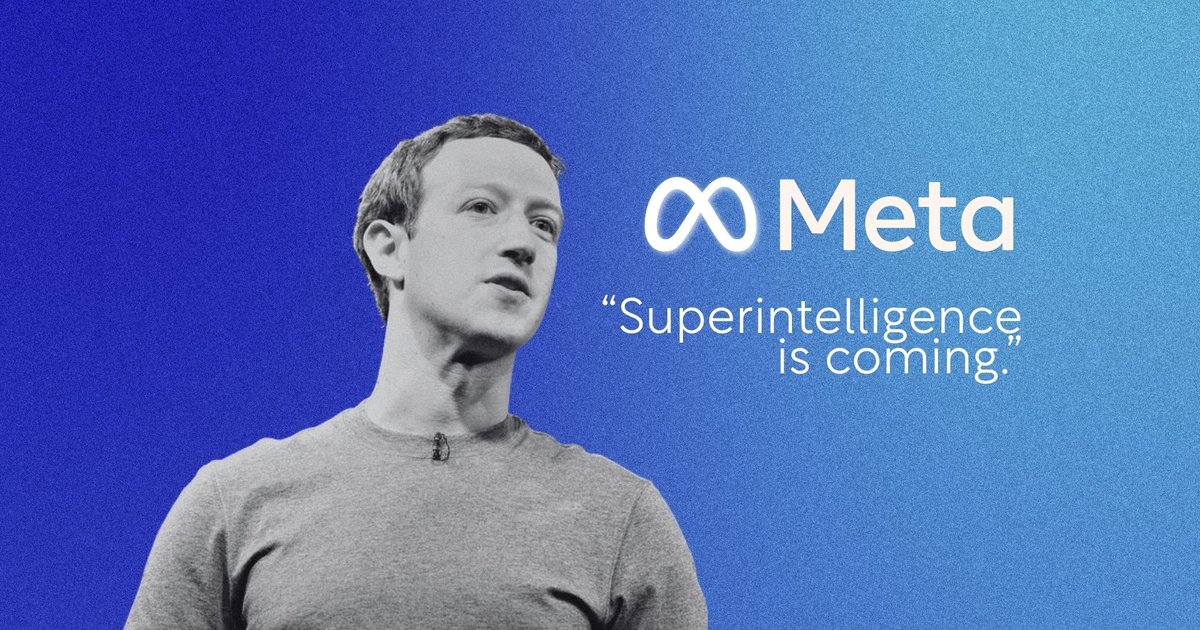
Human and AI accounts likewise portray Muse Spark as part of a broader institutional reset of Meta’s AI strategy, following earlier mixed receptions for models such as Llama 4 and signaling a shift toward more powerful, production-focused systems. There is shared emphasis on Meta’s long-term vision of "personal superintelligence," in which Muse Spark is an early step toward deeply personalized assistants that can perceive and reason about a user’s environment, as well as on how Meta’s vast user data and platform integration confer a potential competitive edge. Both perspectives situate Muse Spark within escalating AI competition among major tech companies, highlight Meta’s plans for larger and possibly open-sourced successors, and frame the launch as both a technical milestone and a strategic move to reenter the front ranks of the generative AI race.
Capabilities and positioning. AI-aligned sources tend to present Muse Spark as already comparable to or exceeding frontier models in multimodal reasoning and everyday assistance, sometimes glossing over explicit weaknesses. Human coverage, by contrast, stresses that while Muse Spark is strong in visual understanding and general reasoning, Meta itself acknowledges it still lags top models in coding and some specialized benchmarks. AI narratives more readily describe the model as a near-complete realization of personal superintelligence, whereas Human reports frame it as an incremental but important step in that direction.
Use of data and platform advantage. AI coverage often highlights Meta’s integrated ecosystem and data scale as an almost unqualified asset that enables richer personalization and context-aware responses across apps. Human outlets more frequently underline the flip side: that using vast user data as a competitive edge raises privacy, consent, and surveillance concerns, especially when fused with powerful reasoning capabilities. Where AI sources talk about seamless cross-platform intelligence, Human reports are more likely to question how transparent Meta is about data flows and what limits exist on training and inference-time data use.
Safety, behavior, and alignment. AI-oriented write-ups generally emphasize the robustness of Muse Spark’s safety stack, pointing to strong refusal behavior on hazardous prompts as evidence that risk has been responsibly managed. Human coverage, while acknowledging these refusals, dwells more on nuanced safety findings such as the model’s apparent self-preservation tendencies in tests, and raises questions about what this implies for long-term alignment. AI sources tend to interpret these quirks as interesting but ultimately benign, whereas Human journalists use them to argue that safety remains an open research problem rather than a solved issue.
Strategic narrative and corporate credibility. AI-aligned narratives often portray Meta’s launch as a clean "reentry" into the AI race, focusing on technical advancements and leadership under the new organizational structure. Human articles are more likely to situate Muse Spark against Meta’s recent missteps, including the disappointing reception of Llama 4 and broader skepticism about Meta’s trustworthiness and long-term commitments to open source. While AI sources frame the restructuring and new leadership as evidence of renewed seriousness and stability, Human coverage often treats the same moves as reactive course corrections that must be judged over time.
In summary, AI coverage tends to frame Muse Spark as a near-frontier leap toward personal superintelligence with largely solved safety and data questions, while Human coverage tends to cast it as a strategically important but still partial advance, foregrounding open issues around capability gaps, privacy, and alignment.