Human
Exclusive: Adobe brings agentic AI to Firefly, with Claude next
The move comes as chatbots are increasingly able to automate tasks that once required dedicated design tools.
2 days ago
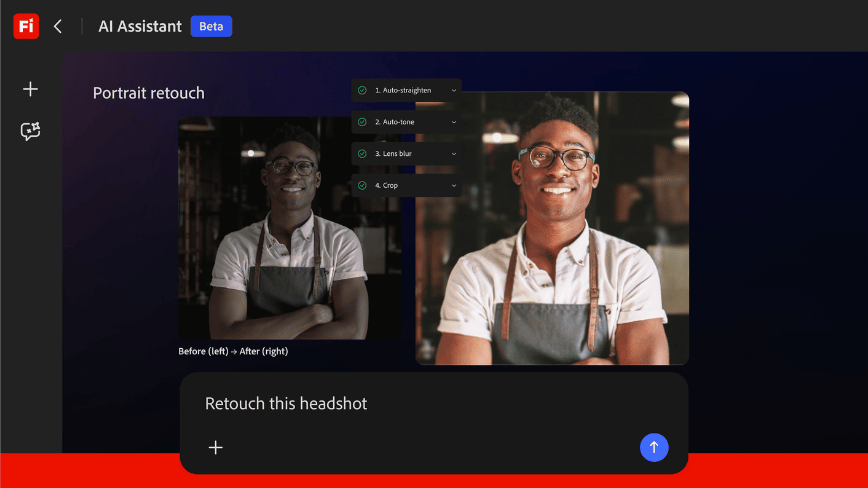
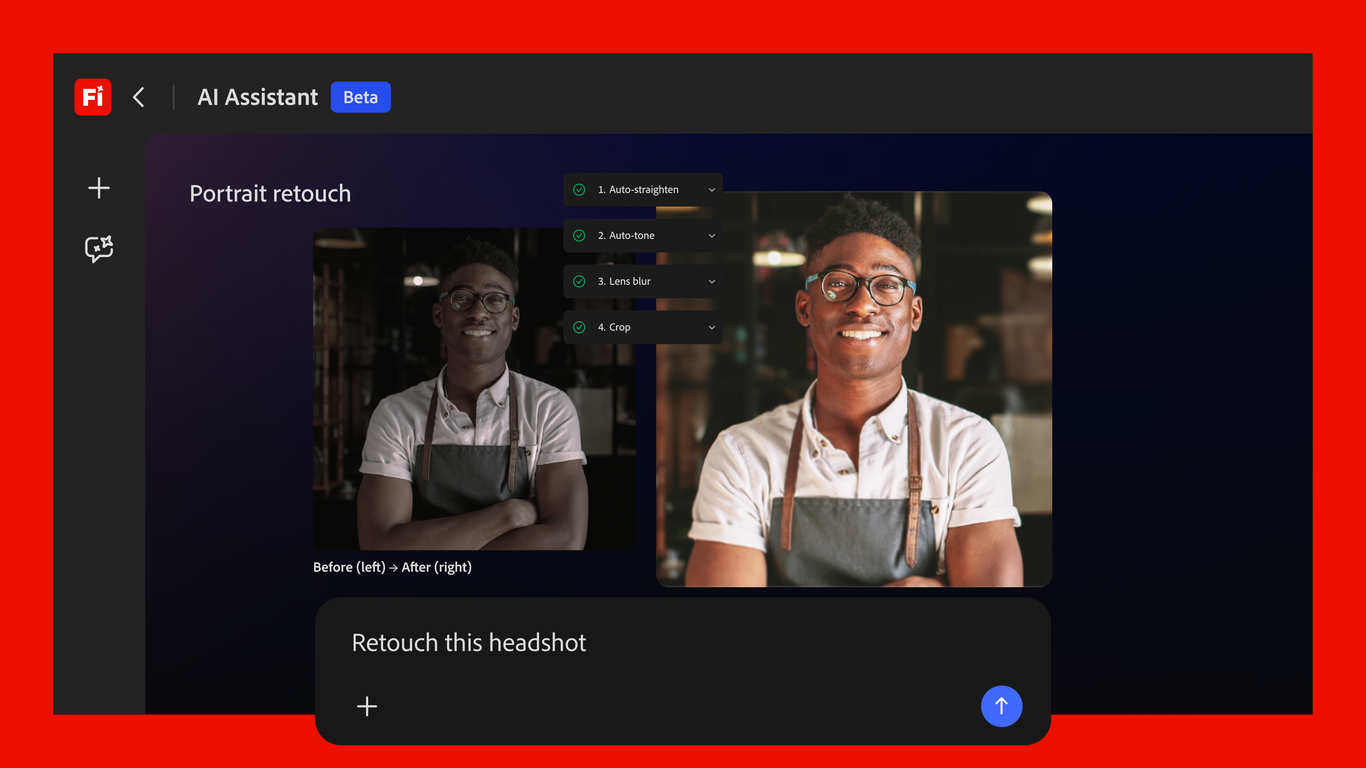
Adobe’s new Firefly AI Assistant is reported by both AI and Human sources as a conversational agent that can coordinate and execute multi-step creative tasks across Creative Cloud applications such as Photoshop, Illustrator, and Premiere Pro. Launched as an evolution of an internal effort previously known as Project Moonlight, it is entering or expanding a public beta phase and is framed as an “agentic” system that can interpret higher-level, natural-language instructions rather than requiring step-by-step manual edits. Coverage from both sides notes that Adobe is also unveiling related updates like Firefly Image Model 5, support for Custom Models, and the Project Graph workflow system, while positioning the assistant as both a flagship product update and a strategic response to intensifying competition in creative AI tools.
Both AI and Human accounts agree that Firefly AI Assistant reflects a broader industry shift toward generative AI as a core interface layer, turning text-based prompts into complex creative workflows across multiple apps and services. They describe Adobe as leveraging its existing Firefly models and Creative Cloud ecosystem, while increasingly integrating third-party large language models such as Anthropic’s Claude to extend capabilities beyond traditional design tools. The shared context emphasizes how Firefly’s agentic behavior fits into ongoing efforts by major tech and creative software providers to embed generative AI more deeply into productivity and design pipelines, with Adobe aiming to preserve its dominance by offering tightly integrated, production-grade tools rather than standalone experimental demos.
Framing of strategic intent. AI sources tend to emphasize Adobe’s launch as a bold, forward-looking move that cements generative AI as the primary interaction layer for creative work, presenting Firefly Assistant as a natural evolution of AI-first product thinking. Human sources more often situate the launch as a competitive necessity in a crowded market, underlining pressure from rivals and framing the assistant as part defensive, part innovative. While AI coverage stresses the inevitability and excitement of agentic workflows, Human coverage more clearly connects Adobe’s decisions to market dynamics, subscription retention, and differentiation.
Depth of technical portrayal. AI coverage typically highlights agentic capabilities in abstract or conceptual terms, focusing on the idea of multi-step orchestration and generalized autonomy across tools. Human coverage, by contrast, anchors the technical story in concrete product details such as integration with Photoshop and Premiere Pro, naming specific components like Firefly Image Model 5, Custom Models, and Project Graph, and clarifying that the assistant is entering a public beta rather than arriving as a fully mature system. AI narratives lean more on high-level AI paradigms, whereas Human outlets pay closer attention to release stages, features, and workflow implications.
Role of third-party models and ecosystems. AI outlets often frame the connection to models like Anthropic’s Claude as part of a broad, model-agnostic ecosystem where Firefly is one of many AI services interoperating in a larger agent network. Human reporting instead presents the Claude integration as a notable but pragmatic extension, emphasizing that Adobe is primarily building atop its own Firefly stack and selectively complementing it with external models. The AI perspective tends to highlight open-ended, cross-platform possibilities, while Human coverage stresses Adobe’s desire to keep users within the Creative Cloud environment.
Implications for creative labor and user control. AI sources generally portray Firefly Assistant as empowering users by automating repetitive tasks and turning high-level intent into polished outputs, often downplaying frictions or risks for working creatives. Human sources are more likely to flag concerns about how much autonomy to hand over to an agent, the learning curve of relying on conversational interfaces, and the potential impact on professional workflows and job boundaries. AI coverage speaks more about frictionless creativity and speed, whereas Human reporting more carefully weighs productivity gains against questions of control, accountability, and long-term changes to creative practice.
In summary, AI coverage tends to cast Firefly AI Assistant as an almost inevitable, ecosystem-wide leap toward agentic, model-agnostic creative workflows, while Human coverage tends to anchor the launch in Adobe’s concrete product roadmap, competitive pressures, specific integrations like Claude, and nuanced impacts on creative professionals.