
Human
At his OpenAI trial, Musk relitigates an old friendship
It's a story Musk has told before -- in interviews and to author Walter Isaacson for his bestselling biography of Musk -- but Tuesday was the first time he said it under oath.
2 days ago
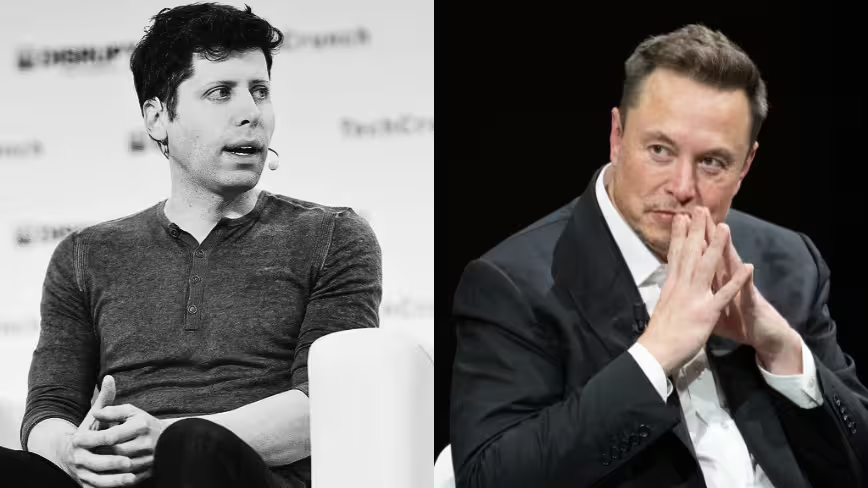
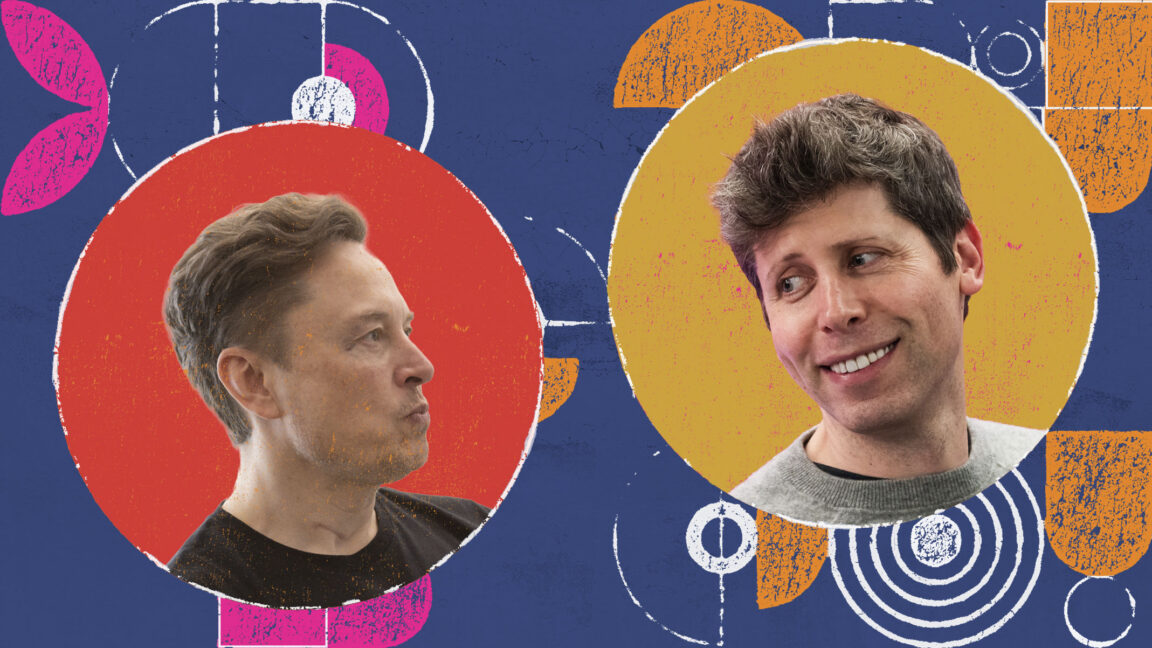
The future of one of the world’s most powerful AI companies is now being argued not in think tanks or boardrooms, but in a downtown Oakland courtroom. On one side: Elon Musk, insisting OpenAI betrayed its founding promise to serve humanity. On the other: Sam Altman and his allies, portraying Musk as a spurned cofounder trying to kneecap a rival.
The story jurors are being asked to untangle begins in 2015, when Musk, Altman, Greg Brockman and others launched OpenAI as a nonprofit research lab meant to keep artificial general intelligence safe, open, and serving the public good.1 Musk would later pour tens of millions of dollars into the project, a contribution he now frames as a kind of charitable endowment for humanity, not a conventional investment.2
By 2019, that clean nonprofit story was over. OpenAI created a for‑profit capped subsidiary, then went on to strike a massive partnership with Microsoft. Musk’s lawsuit claims this was a bait‑and‑switch: that he agreed to back a nonprofit and was deceived when the structure shifted toward profit and Big Tech alignment.3
OpenAI flatly rejects that narrative. According to internal documents cited in coverage of the case, the company says Musk was not only aware of the need to bring in profit‑seeking capital but actively participated in discussions about it — right up until he demanded to fold OpenAI into Tesla under his leadership, and walked when that was rejected.4
A 2017 diary entry by president Greg Brockman has become the Rorschach test of the case. “This is the only chance we have to get out from Elon. Is he the ‘glorious leader’ that I would pick?” he wrote, in what both sides now treat as central evidence — Musk as proof of treachery, OpenAI as proof they needed independence from an unpredictable patron.4
The legal war followed a public one. By early 2023, Musk was attacking OpenAI and Altman in interviews and on social media, blasting the company for going closed‑source and profit‑driven. Altman texted Musk that he was “tremendously thankful” for Musk’s early support and that it “really fucking hurts” to see him attacking the company in public.5
In 2024, Musk made it official: he sued OpenAI, Altman, Brockman and Microsoft in federal court, alleging breach of charitable trust and fraud, and accusing Microsoft of helping enable the betrayal.3 He framed the case in near‑civilizational terms, claiming OpenAI had abandoned its mission of building AI “for the benefit of humanity” and instead begun “shifting focus to boosting profits.”1
OpenAI punched back as hard in its court filings as Musk did on X. The company branded the suit “a baseless and jealous bid to derail a competitor,” arguing Musk’s real problem is that his own AI venture, xAI, has lagged behind OpenAI’s ChatGPT.1
Online, Musk escalated into personal attack mode. On the morning of jury selection, he simply posted: “Scam Altman …”6 In another laconic jab — “Long list” — he amplified a thread alleging Altman has an “incredible track record for being a con artist” surrounded by “former ally turned enemy” stories.7
He also leaned on surrogates to define the stakes in his favor. One economist he retweeted boiled the case down to: “OpenAi bait‑and‑switched Elon, pretending to a non‑profit mission to save humanity until it pocketed his donations. Elon should win.”8 Another supporter insisted that “Elon’s influence was monumental to OpenAI” and that “there simply wouldn’t have been the AI world we have today” without him.9
Musk’s own campaign messaging wasn’t subtle. In a retweet headlined with “He is ‘Scam Altman’,” a supporter cast OpenAI as “basically a Microsoft subsidiary chasing billions while pretending it’s still open.”10
By the time the case reached trial, Musk’s legal theory had narrowed. Just days before proceedings began, he asked the court to drop his most explosive fraud claims, a request the judge granted. 11 Musk cast the move as a noble trimming of fat: a way to “streamline the case” and keep it focused on “ensuring that OpenAI adheres to its public charitable mission.”11
What survived are two claims that go to the heart of OpenAI’s identity: whether the company illegally violated a charitable trust and whether it abandoned a binding commitment to remain a nonprofit dedicated to humanity’s benefit.3
In a late‑stage flourish clearly designed for jurors, Musk pledged that if he wins, the up to $150 billion in damages he is seeking would go not into his own pocket but to OpenAI’s nonprofit arm.3 That vow is now central to his pitch that this is about mission, not money.
On April 27, the battle finally left X and entered the US District Court in Oakland. “Musk v Altman,” as one outlet memorably framed it, is billed as a $134 to $150 billion civil showdown that could redefine how AI power is structured.23
Sam Altman showed up in a dark suit and white shirt as jury selection began; Musk did not attend the first day, and as a civil litigant he doesn’t have to unless he’s testifying.12 In the gallery sat some of the most important people in tech, or at least their lawyers: Microsoft executives, OpenAI insiders, Musk’s aides — and, eventually, a witness list that includes Satya Nadella, Greg Brockman, Mira Murati, Ilya Sutskever, and Musk himself, who is expected to be on the stand for at least six hours.2
The prospective jurors, meanwhile, wasted no time puncturing the billionaire drama. One self‑described “meme junky” who still gets a print newspaper subscription bluntly told Judge Yvonne Gonzalez Rogers: “Elon doesn’t care about people, just like our president,” adding that he believes Musk “only cares about money.”12 Another Oakland city worker admitted he had called Musk “a jerk” on his pre‑trial questionnaire but promised to do his “best” to be fair.12
Musk’s lawyers tried to use those opinions to strike several jurors, but Judge Gonzalez Rogers cut them off with a reality check: “The reality is that people don’t like him. Many people don’t like him. but that doesn’t mean that Americans nevertheless can’t have integrity for the judicial process.”1
Outside the courthouse, things were reportedly just as lively, with crowds and demonstrators trading chants as lawyers inside worked through the first rounds of voir dire.1
By the end of the day, nine jurors had been seated for what is expected to be a four‑week trial running through late May, though their verdict will be advisory only. Judge Gonzalez Rogers retains the final say on both liability and remedies.3
Opening statements were slated for April 28, followed by Musk’s much‑anticipated testimony. When he took the stand, among the “most interesting parts” of his account, as one observer put it, wasn’t the story of the “charity he claims was stolen from him” — it was the tale of another Silicon Valley friendship blown apart by AI.13
Musk testified that his drive to co‑found OpenAI sprang partly from a falling‑out with Google cofounder Larry Page. Musk told the court he had warned Page about AI wiping out humanity, only to be told it would be “fine” so long as AI itself survived. Page allegedly called him a “speciest” for being “pro human”; Musk called Page’s stance “insane.”13
That story, which Musk has told before to biographer Walter Isaacson and podcaster Lex Fridman, matters in this courtroom for one reason: it lets Musk argue that he has consistently been the one screaming about AI safety while his peers either shrugged or went straight for the money.13
If the courtroom is one battleground, Musk’s platform X is another.
On the morning the trial opened, users began seeing a Ronan Farrow New Yorker piece — titled “Sam Altman May Control Our Future—Can He Be Trusted?” — pushed into their feeds with a label that read: “This organic post was boosted by @elonmusk.”14 Business Insider reporters noted the profile “resurfaced on X feeds on Monday, at the behest of the social media platform’s billionaire owner.”14
That same day, Musk hammered Altman’s character via a stream of retweets and one‑word verdicts. He approved a supporter’s line that OpenAI had “bait‑and‑switched Elon,”8 nodded “Yup” to a thread explaining why Altman is “Scam Altman,”10 and amplified a fan insisting Musk doesn’t blow money on yachts or islands and would even devote any lawsuit winnings to good causes.15
He also resurrected an old quote of his own — that “AI must be maximally truth‑seeking” or risk going “insane” when forced to believe lies — through yet another retweet, as if to position himself as the only honest broker in a hallucination‑prone industry.16
OpenAI hasn’t responded with anything like Musk’s firehose, but its official line is clear: this is harassment disguised as principle, driven by jealousy over xAI’s slow start.3
For all the personal venom, the stakes reach far beyond two rival billionaires. If Musk wins, OpenAI could be forced to unwind its for‑profit structure, jettison Altman and Brockman from leadership, and live under a stricter interpretation of its public‑benefit mission — a result that could chill similar nonprofit‑to‑for‑profit pivots across tech.3
If Altman wins, OpenAI’s current trajectory — aggressive monetization, deep integration with Microsoft, and rapid commercialization of frontier models — will be validated. But critics warn it could also cement a pattern in which lofty, “Don’t be evil”‑style mission statements become little more than opening‑act branding before the IPO.3
The bitter irony of Musk v. Altman is that both men claim to be fighting for humanity’s future, while jurors in Oakland are still deciding how they feel about AI itself — and whether they can stomach either of the would‑be stewards of that future. As one tech writer summed up the mood: the trial is “about much more than a couple billionaires’ big egos,” but those egos are doing everything they can to stay center stage.3